Address:
10 Maple Grove Drive - The home of James Ryrie and Catherine McLean
Summary:
James Ryrie merged his jewelry store, Ryrie Bros, with Henry Birks & Sons of Montreal in 1905 and James became the president of the merged company.
Property Details:
Edgemere Estate
Concession IV Lot 6 was once Crown Land which was granted to Barnett Griggs in 1824 after his successful Land Petition. Griggs was a Loyalist from New Jersey who made the journey north with his wife Nancy and brother George. They first purchased land on Lot 6, Concession 3 in 1812, north of Lakeshore Rd., and built a two storey house which became a hotel. The addition of Lot 6 Concession 4 extended his ownership all the way down to the lake.
Griggs died in 1864 and after a couple of owners, the land was purchased by John Mason in 1871. According to the 1877 Map of Trafalgar Township, he had a house with an orchard.
After Mason sold in 1896 ownership changed hands a couple of times before James Ryrie purchased the land in 1906 for $5,500. He also purchased a portion of Concession 3 Lot 6, including the Inn owned by Barnett Griggs. The farm and orchards were run by Ryrie 's sons, Harry and Grant.
James Ryrie was born in Toronto in 1854 and at the age of 16 became an apprentice at Segworth & Co., a jewellery store on Yonge Street. After becoming manager, he purchased the store and partnered with his two brothers, and it became known as "Ryrie Bros.". The store flourished and it was moved to a new location on Yonge Street. In 1905, Ryrie Bros. merged with Henry Birks & Sons of Montreal and James became president. In 1877 he married Catherine McLean and they had six children.
Much of the following is taken from the Town's Heritage Structure Report:
"At the turn of the twentieth century, Oakville gained a reputation as the social centre for wealthy city dwellers from Toronto and Hamilton who flocked to the Town to enjoy the peace and quiet of its lakeside setting." The Report also stated that Ryrie participated in local environmental committees, and this prompted him to purchase the lakeside orchard east of Oakville for his country home which he called Edgemere, "the water's edge ". He enlisted architects Burke & Harwood to design the house (now demolished), the groundskeeper's cottage and the coach house. All of the buildings consisted of flat lake stone on the first storey while the upper storey consisted of solid half-timber construction of local hardwood, morticed and fastened with wooden pins.This style blended with the environment and was an ideal of the Arts & Crafts movement. This style was so popular with a certain class that it earned the nickname "stockbroker’s Tudor".
The grounds were designed by landscape artist Charles Ernest Woolverton who designed the layout of the sixteen acres and incorporated Eastern artifacts collected on Ryrie's Asian travels. Remnants of the historic landscape plan include stone walkways, steps, and a formal rectangular garden area. On the northern edge of the property is a stone wall with an ornate English gate.
The existing Grounds Keeper's Lodge is located north of where the main house was and retains much of its original character. The Coach House was a stable for Ryrie's horses and was later converted into a garage. The other building which still exists on the property is the Conservatory, built c1920 which grew the flowers for the estate.
Following the death of his wife Catherine, James Ryrie sold Edgemere in 1928 to retired contractor L. A. DeGraff of New York State, and in 1934 it was acquired by John E. (Jack) Hammell.
According to Toronto Public Library's scrapbook of articles, Hammell was a larger than life character who had been a circus performer, prize fighter, prospector, patron of the arts, a philanthropist, and one of the most sought after public speakers of his day.
Hammell owned several gold mines in Ontario and introduced flight into the northern mines to bring supplies, men, & food by renting government aircraft. This was something which had never been done before.
He was a frequent traveller to the Far East where he brought back art to add to the collection that Ryrie had acquired. He also brought back the entire Chinese antique collection from the 1933 Chicago World'Fair, including a six foot bronze Buddha which he placed on his dock. He was also a close friend of Prime Minister William Lyon McKenzie King. Hammell died in 1958 at the age of 82 and the same year the property was sold to John (Jock) & Ivy Gairdner.
Jock was the son of James Gairdner who lived on the former Colonel W.G. MacKendrick property. James bequeathed the property to the Town of Oakville which is now known as "Gairloch Gardens". James became a stock broker and, after being in business for a few years, formed his own company in 1921, known as “Gairdner & Co. Ltd.” His son Jock joined the company later, and eventually Jock’s son, John, ran it as a boutique firm.
The Gairdners remained at Edgemere until 1992 at which time it was sold, and the main house was, sadly, demolished. Another home was built on the property and was also demolished. However, several buildings on the estate from the early 1900s remain, including the Groundskeeper 's Cottage, Coach House and Greenhouse. The remainder of the property consists of 30 townhouse condominium units. The public has access to the lake via a laneway on the west side of the property, and at the south end of Maplegrove Drive. The walkway is known as the Edgemere Promenade.
Concession IV Lot 6 was once Crown Land which was granted to Barnett Griggs in 1824 after his successful Land Petition. Griggs was a Loyalist from New Jersey who made the journey north with his wife Nancy and brother George. They first purchased land on Lot 6, Concession 3 in 1812, north of Lakeshore Rd., and built a two storey house which became a hotel. The addition of Lot 6 Concession 4 extended his ownership all the way down to the lake.
Griggs died in 1864 and after a couple of owners, the land was purchased by John Mason in 1871. According to the 1877 Map of Trafalgar Township, he had a house with an orchard.
After Mason sold in 1896 ownership changed hands a couple of times before James Ryrie purchased the land in 1906 for $5,500. He also purchased a portion of Concession 3 Lot 6, including the Inn owned by Barnett Griggs. The farm and orchards were run by Ryrie 's sons, Harry and Grant.
James Ryrie was born in Toronto in 1854 and at the age of 16 became an apprentice at Segworth & Co., a jewellery store on Yonge Street. After becoming manager, he purchased the store and partnered with his two brothers, and it became known as "Ryrie Bros.". The store flourished and it was moved to a new location on Yonge Street. In 1905, Ryrie Bros. merged with Henry Birks & Sons of Montreal and James became president. In 1877 he married Catherine McLean and they had six children.
Much of the following is taken from the Town's Heritage Structure Report:
"At the turn of the twentieth century, Oakville gained a reputation as the social centre for wealthy city dwellers from Toronto and Hamilton who flocked to the Town to enjoy the peace and quiet of its lakeside setting." The Report also stated that Ryrie participated in local environmental committees, and this prompted him to purchase the lakeside orchard east of Oakville for his country home which he called Edgemere, "the water's edge ". He enlisted architects Burke & Harwood to design the house (now demolished), the groundskeeper's cottage and the coach house. All of the buildings consisted of flat lake stone on the first storey while the upper storey consisted of solid half-timber construction of local hardwood, morticed and fastened with wooden pins.This style blended with the environment and was an ideal of the Arts & Crafts movement. This style was so popular with a certain class that it earned the nickname "stockbroker’s Tudor".
The grounds were designed by landscape artist Charles Ernest Woolverton who designed the layout of the sixteen acres and incorporated Eastern artifacts collected on Ryrie's Asian travels. Remnants of the historic landscape plan include stone walkways, steps, and a formal rectangular garden area. On the northern edge of the property is a stone wall with an ornate English gate.
The existing Grounds Keeper's Lodge is located north of where the main house was and retains much of its original character. The Coach House was a stable for Ryrie's horses and was later converted into a garage. The other building which still exists on the property is the Conservatory, built c1920 which grew the flowers for the estate.
Following the death of his wife Catherine, James Ryrie sold Edgemere in 1928 to retired contractor L. A. DeGraff of New York State, and in 1934 it was acquired by John E. (Jack) Hammell.
According to Toronto Public Library's scrapbook of articles, Hammell was a larger than life character who had been a circus performer, prize fighter, prospector, patron of the arts, a philanthropist, and one of the most sought after public speakers of his day.
Hammell owned several gold mines in Ontario and introduced flight into the northern mines to bring supplies, men, & food by renting government aircraft. This was something which had never been done before.
He was a frequent traveller to the Far East where he brought back art to add to the collection that Ryrie had acquired. He also brought back the entire Chinese antique collection from the 1933 Chicago World'Fair, including a six foot bronze Buddha which he placed on his dock. He was also a close friend of Prime Minister William Lyon McKenzie King. Hammell died in 1958 at the age of 82 and the same year the property was sold to John (Jock) & Ivy Gairdner.
Jock was the son of James Gairdner who lived on the former Colonel W.G. MacKendrick property. James bequeathed the property to the Town of Oakville which is now known as "Gairloch Gardens". James became a stock broker and, after being in business for a few years, formed his own company in 1921, known as “Gairdner & Co. Ltd.” His son Jock joined the company later, and eventually Jock’s son, John, ran it as a boutique firm.
The Gairdners remained at Edgemere until 1992 at which time it was sold, and the main house was, sadly, demolished. Another home was built on the property and was also demolished. However, several buildings on the estate from the early 1900s remain, including the Groundskeeper 's Cottage, Coach House and Greenhouse. The remainder of the property consists of 30 townhouse condominium units. The public has access to the lake via a laneway on the west side of the property, and at the south end of Maplegrove Drive. The walkway is known as the Edgemere Promenade.
Click to Enlarge
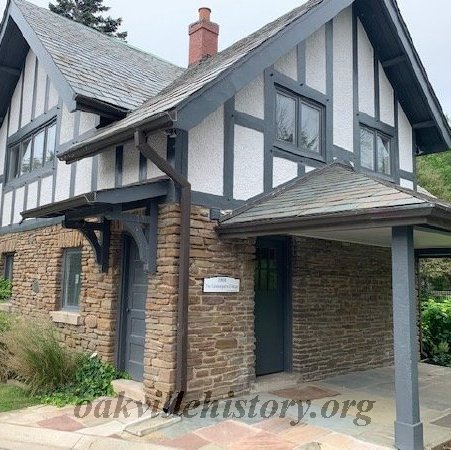 The Gatekeeper's Cottage
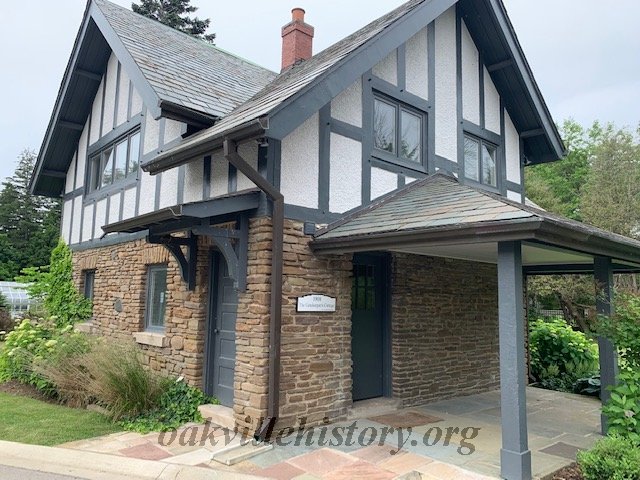 The Gatekeeper's Cottage